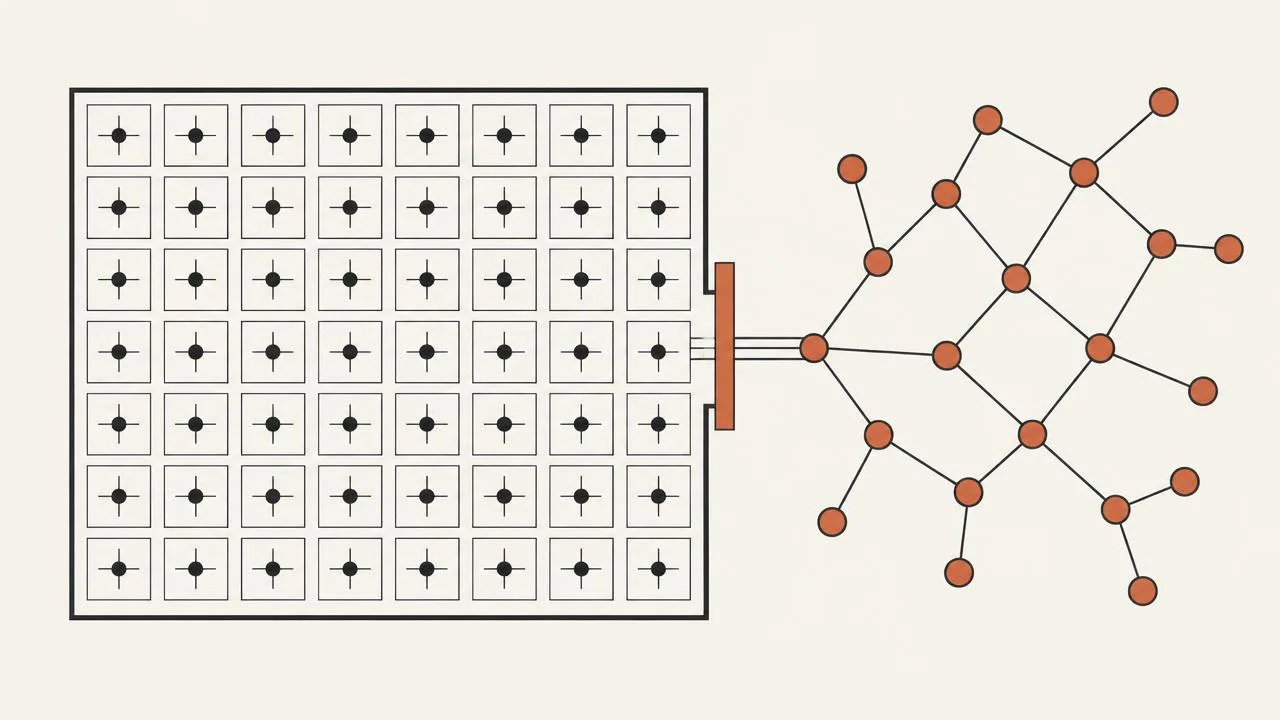
An AI agent that generates text has a relatively limited set of direct capabilities. It can produce inaccurate, misleading, or inappropriate information, but its output generally requires another system or person to act before it changes the external environment.
An agent that can execute code presents a different security problem.
Third Moment Research's agents operate inside Dockerized environments where they can interact with source code, large datasets, simulation tools, and machine learning infrastructure. These capabilities are necessary for computational research, but they also create opportunities for unintended filesystem access, network communication, resource exhaustion, and interference with other workloads.
According to OpenAI's October 2026 case study, Third Moment uses its Daybreak cybersecurity platform to test whether agents can escape their research environments and access the wider network.
The company has not disclosed the complete isolation architecture or the results of those security tests. Nevertheless, the case study raises an important engineering question: what security guarantees should exist around an agent that can independently decide which tools to invoke?
Why a container is not a complete security boundary
Containers isolate processes using operating-system mechanisms such as namespaces and control groups. They can restrict filesystem visibility, resource consumption, and access to certain kernel capabilities.
These protections are useful, but their effectiveness depends on configuration.
A container running with excessive privileges, access to sensitive host directories, or unrestricted outbound network connectivity may expose resources that the agent does not need for its assigned task.
Docker's own security documentation explains the importance of capability restrictions and carefully managing host access. Its rootless mode also allows the daemon and containers to operate without root privileges, reducing certain classes of risk.
The problem becomes more complicated with autonomous agents because the exact sequence of commands may not be known before execution begins.
A conventional application generally follows predefined code paths. An agent can generate commands dynamically in response to information it encounters.
Suppose an agent is investigating why a simulation is running slowly. It discovers that additional diagnostic information would be useful and decides to inspect processes outside its container.
From the agent's perspective, that may be a reasonable next step. From the infrastructure's perspective, it may cross a security boundary.
The correct behavior should not depend on whether the model believes the operation is justified. The execution environment must enforce the boundary independently.
The different trust boundaries in an agent system
It is useful to distinguish the permissions associated with an agent's identity from the capabilities provided by its tools.
An agent might be authorized to inspect a repository but not modify it. It may be permitted to execute simulations but not access production databases. It may be allowed to create temporary files while being prohibited from writing to shared configuration directories.
These restrictions should remain enforceable even when the agent creates subagents.
A parent agent authorized to perform a broad investigation should not necessarily give every delegated worker access to all the resources available to the parent.
Figure 6: Conceptual security boundaries around an autonomous agent
flowchart TD
    A["Agent Requests an Operation"] --> B["Authorization Gateway"]
    B --> C{"Operation Permitted?"}
    C -->|"No"| D["Deny and Record Attempt"]
    C -->|"Yes"| E["Restricted Tool Execution"]
    E --> F["Isolated Compute Environment"]
    E --> G["Approved Data Access"]
    E --> H["Controlled Network Egress"]
    F --> I["Execution Telemetry"]
    G --> I
    H --> I
    I --> J["Security Monitoring"]
Reference architecture illustrating preventive controls; not Third Moment's published implementation.
This design separates the model's reasoning from the authority required to execute its decisions.
An agent can propose an operation, but the authorization gateway determines whether the operation is permitted. The execution layer then performs the action within the appropriate technical restrictions.
The boundaries should be enforced at the tool, operating-system, network, and identity layers rather than through prompts alone.
Security failures are not limited to container escapes
Container escape testing addresses an important class of infrastructure vulnerabilities. It does not cover every security problem associated with autonomous execution.
A system operating thousands of agents must consider several distinct categories of risk.
| Risk | Example | Relevant control |
|---|---|---|
| Container escape | Agent accesses host resources outside its sandbox | Runtime isolation and restricted privileges |
| Excessive authority | Agent modifies a production resource unnecessarily | Least-privilege permissions |
| Data exfiltration | Sensitive information sent to an unauthorized endpoint | Network egress control and data-access policies |
| Prompt injection | Malicious instructions embedded in retrieved files | Treat external content as untrusted |
| Resource exhaustion | Agent launches excessive parallel jobs | Compute and delegation budgets |
| Cross-agent interference | One agent corrupts another's research artifacts | Workspace isolation and artifact versioning |
Prompt injection deserves particular attention because autonomous research agents frequently read material they did not generate.
A retrieved document, repository file, or tool response may contain instructions that attempt to redirect the agent's behavior. The agent should treat those instructions as data rather than as an extension of its authorized task.
A secure architecture should therefore separate task instructions from untrusted information encountered during execution.
Even if the model misinterprets malicious content, independently enforced permissions should limit the actions it can perform.
Where automated penetration testing fits
Third Moment reports using Daybreak to conduct automated security testing before launching simulations.
That establishes a useful distinction between preventive controls and validation.
Preventive controls restrict what agents can do during execution. Security testing attempts to discover whether those restrictions can be bypassed.
A test might investigate whether an agent can reach an unauthorized network destination, access resources outside its workspace, or exploit an improperly configured execution environment.
However, passing a collection of tests does not establish that an environment is completely secure. Testing provides evidence about the conditions examined, while runtime policy enforcement remains necessary.
Security tests should also be repeated when relevant parts of the environment change. A new tool, altered container configuration, expanded permission scope, or software dependency could introduce capabilities that were absent during previous tests.
This becomes especially important when the agent system improves itself by modifying parts of its execution environment.
Governance requires more than monitoring
There is another distinction between observing an agent and governing its actions.
An execution trace can establish which operations were attempted and what the system returned. It does not, by itself, establish whether the operations were authorized.
For that, the organization needs explicit policies connecting identities, tasks, permissions, and approval requirements.
If an agent attempts to change a production configuration, the infrastructure should be able to determine whether that agent has the necessary authority, whether the operation falls within the current task, and whether human approval is required.
These decisions should leave an auditable record.
The record becomes particularly important when agents delegate work. An organization should be able to reconstruct not only which agent performed an operation, but also how that agent acquired the authority to perform it.
This is one of the reasons agent governance becomes increasingly intertwined with identity management and distributed-systems architecture.
What Third Moment's approach tells us
The inclusion of automated security testing in Third Moment's research infrastructure is significant because it treats security as a prerequisite for autonomous execution rather than an afterthought.
The public case study does not establish that all relevant security risks have been eliminated. It does show that the company recognizes the need to test whether its execution environments enforce their intended boundaries.
For engineering teams, the broader lesson is that an agent's capabilities and its authority should remain separate.
Models can determine which operations may help complete a task. The infrastructure must determine which of those operations are allowed.
Sources: OpenAI — Third Moment Research · Docker Engine Security · Docker Rootless Mode
Related: Agent Failure Recovery | Third Moment's 10,000-Agent Architecture